
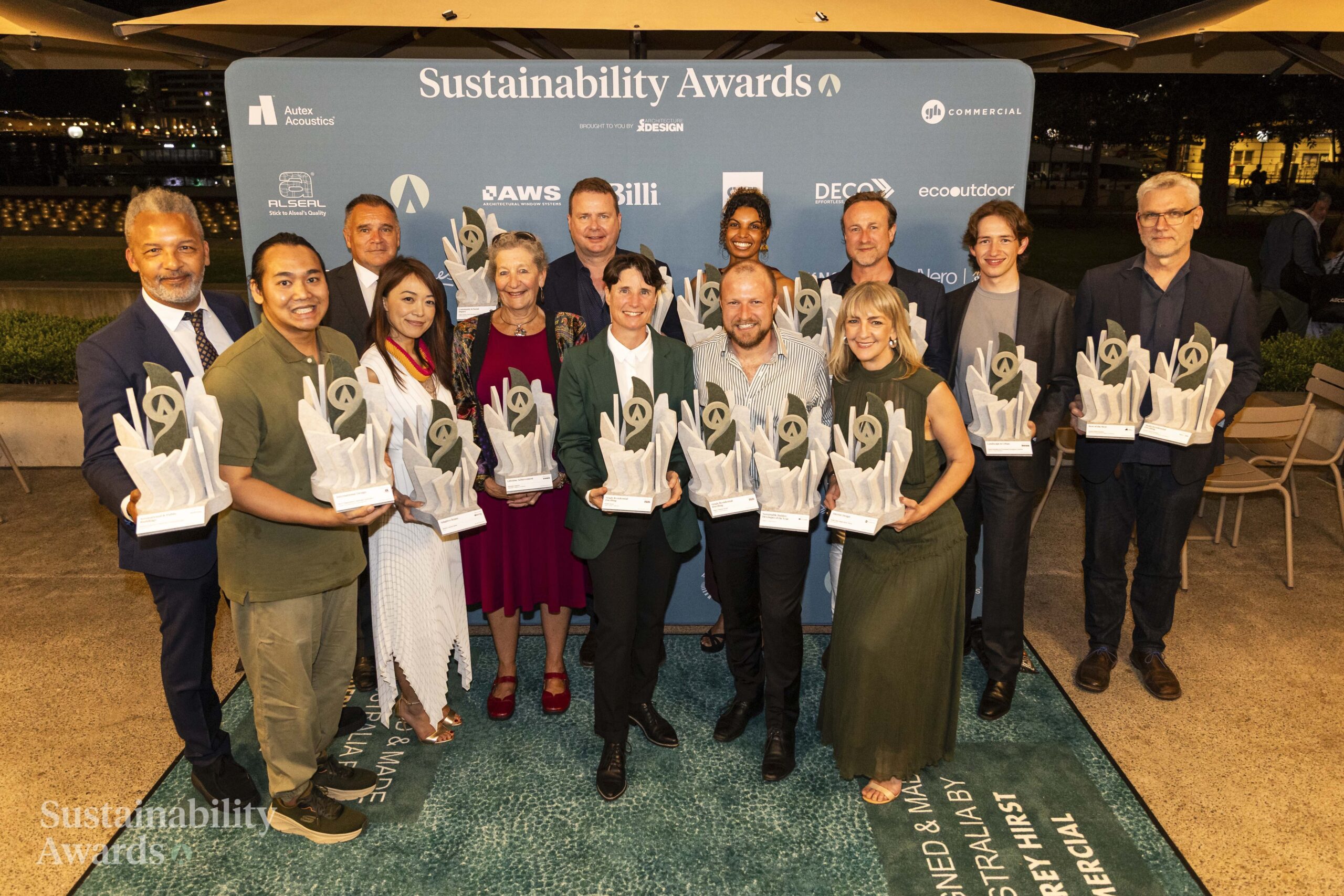
Australia’s architecture and design community gathered at Sydney’s Museum of Contemporary Art to celebrate two decades of innovation, leadership and progress towards a more sustainable built environment.
Thank you for reading this post, don't forget to subscribe!SYDNEY, AUSTRALIA – The 2026 Sustainability Awards marked a historic milestone on Thursday, 12 November, celebrating 20 years of recognising Australia’s most innovative and impactful achievements in sustainable architecture and design.
Architects, designers, industry leaders, jurors, sponsors and finalists gathered at the Museum of Contemporary Art Australia’s Foundation Hall for an evening dedicated to celebrating excellence, recognising industry pioneers and honouring the projects and people shaping a more sustainable future.
Presented by Architecture & Design, the Sustainability Awards have grown into Australia’s longest-running awards program dedicated to sustainability in the built environment. The 20th anniversary provided an opportunity to reflect on how far the industry has progressed, while recognising the increasing ambition, creativity and collaboration needed to address the environmental and social challenges ahead.
An independent panel of industry experts assessed projects spanning architecture, interiors, materials, urban landscapes, construction and individual achievement. This year’s winners demonstrated an increasingly holistic approach to sustainability, extending beyond energy efficiency and carbon reduction to encompass social impact, cultural connection, circularity and long-term resilience.
Cowper Street Housing takes top honours
The evening’s highest accolade, Best of the Best, sponsored by Autex Acoustics, was awarded to Cowper Street Housing by JPW and GroupGSA as delivery architects.
Located in Sydney’s Glebe, the landmark social housing development demonstrates how thoughtful, sustainable design can address housing affordability, community wellbeing and environmental responsibility simultaneously.
Replacing 19 ageing dwellings with 75 new social homes, the development significantly increases housing capacity while providing high-quality, resilient and inclusive housing for approximately 132 residents. Its approach to material selection, passive design and community-focused living exemplifies the broader ambitions of the Sustainability Awards.
The project also secured the Multiple Residential Dwelling award, cementing its position as one of the standout achievements of the 2026 program.
Celebrating the pioneers and emerging leaders of sustainability
Among the evening’s most significant honours was the Lifetime Achievement Award, sponsored by Architectural Window Systems (AWS), presented to Mahalath Halperin of Mahalath Halperin Architects.
With more than three decades dedicated to environmentally responsible architecture, Halperin has been a longstanding advocate for climate-responsive design, building performance and holistic sustainability. Her work, particularly in regional Australia, reflects a career committed to creating architecture that responds meaningfully to both people and place.
In her acceptance speech, Halperin offered a thought-provoking vision for the industry’s future, suggesting that the ultimate ambition should be to make the term sustainability redundant – not because its importance has diminished, but because sustainable design and construction should simply become the way we build.
Her reflection was particularly fitting for the Awards’ 20th anniversary, encapsulating two decades of progress and the industry’s continuing responsibility to embed sustainability into everyday practice rather than treating it as an optional consideration.
At the other end of the professional spectrum, Jasmine Lawrence of Grimshaw was named Emerging Sustainable Architect/Designer, sponsored by Knotwood, recognising her contribution to embedding environmental responsibility and sustainable thinking into architectural practice.
Together, these awards reflected one of the central themes of the anniversary: meaningful progress depends on both the legacy of industry pioneers and the ambition of the next generation.
A broader vision for sustainable design
The 2026 winners demonstrated the diversity and sophistication of sustainability across Australia’s built environment, recognising projects that balance environmental performance with cultural responsibility, community wellbeing and long-term value.
The BAAKA Cultural Centre by Kaunitz Yeung Architecture was recognised for Adaptive Reuse, celebrating a project shaped through deep collaboration with the Barkandji community and designed to preserve cultural knowledge for future generations.
Carland Constructions was another standout winner on the night, taking home two awards recognising its commitment to sustainable residential construction.
The company was named Sustainable Builder/Developer of the Year, while its Pigeon Passive House project was recognised as a joint winner in the Single Residential Dwelling category, alongside Ample House by Green Sheep Collective.
The double win highlights the growing importance of high-performance residential construction and the critical role builders play in translating sustainable design principles into reality. Through its commitment to energy efficiency, building performance and quality craftsmanship, Carland Constructions demonstrates how sustainability can be embedded in both individual projects and broader building practices.
Gugan Gulwan Youth Aboriginal Corporation Facility by COX Architecture received the Community & Social Impact award, highlighting architecture’s capacity to create culturally safe, inclusive spaces and deliver lasting community benefit.
Other notable winners included Sydney Fish Market in the Prefab & Modular category, Rosebery Engine Yards by GroupGSA in Commercial, and Twelve Apostles and Poombeeyt Koontapool Lookouts by Denton Corker Marshall, which received both the Landscape & Urban and Editor’s Choice awards.
The Uluṟu–Kata Tjuṯa Signature Walk, designed by Troppo Architects and HIP V. HYPE, was awarded the Hospitality & Tourism title and received a Highly Commended recognition in the Prefab & Modular category.
Developed in partnership with Aṉangu Traditional Owners, the project represents a considered approach to environmentally sensitive tourism, demonstrating how architecture can respond to the cultural and ecological significance of its location.
In accepting the award, the project team reflected on the extraordinary 10-year journey behind its delivery, acknowledging the enduring partnerships formed between the architects, builders and project stakeholders. Their light-hearted recollection of watching their children grow up throughout the process brought a personal dimension to the evening, highlighting that sustainability is as much about lasting relationships and shared commitment as it is about buildings and materials.
Across the winning projects, a consistent message emerged: sustainable architecture is no longer defined solely by the environmental performance of individual buildings, but by the lasting value they create for communities, ecosystems and future generations.
Sustainability beyond borders
The evening also celebrated the international reach of sustainable design, with Tak Fa Regenerative Landscape Destination by Aukara Architecture and Development taking home the International Design award.
In a particularly memorable moment, architect Aukarapon travelled from Thailand to Sydney to attend the milestone gala and accept the award in person. His acceptance speech was read on his behalf, sharing a simple but powerful message about the relationship between people and the natural environment.
“I believe people and nature can live happily together. This award is for everyone.”
His heartfelt message captured the spirit of the evening, demonstrating that while sustainable design responds to different landscapes, cultures and communities, the ambition to create a better relationship between people and nature is universal.
Celebrating 20 years, looking towards the future
Since its inception in 2006, the Sustainability Awards have helped champion sustainable design as an essential consideration within Australian architecture and construction.
Twenty years on, the program reflects the evolution of the industry, from early conversations about energy efficiency and responsible material selection to today’s greater emphasis on regenerative design, social responsibility, adaptive reuse and circularity.
The anniversary gala was not only a celebration of this year’s outstanding achievements, but also a recognition of the architects, designers, builders, manufacturers, clients and industry partners who have helped advance the sustainability agenda over the past two decades.
As the Sustainability Awards enter their third decade, Halperin’s words offer a fitting challenge to the industry: to reach a point where sustainability no longer needs to be recognised as something exceptional, because it has become fundamental to how every building is conceived, designed and delivered.
Until then, the Sustainability Awards will continue to celebrate those leading the way.


